ABA for a 7-Year-Old with Echolalia: What Parents Need to Know
In short: Echolalia in 7-year-olds is often a form of communication. ABA therapy focuses on teaching functional language and reducing repetitive speech through positive reinforcement and naturalistic strategies. Many insurance plans, including Medicaid, cover ABA. ABA For My Child is a free service that matches families with vetted providers.
Key takeaways
- Echolalia is a common trait in autistic children and often serves a communicative purpose.
- ABA therapy can shape echolalia into functional language using scripting, prompting, and reinforcement.
- A 7-year-old can benefit from both structured and naturalistic ABA approaches to build communication skills.
- Insurance, including private plans and Medicaid, frequently covers ABA therapy for autism-related echolalia.
Understanding Echolalia in 7-Year-Olds
Echolalia is the repetition of words, phrases, or sounds heard from others or from media. For many autistic children, especially those at age seven, echolalia is not just meaningless repetition - it can be a functional form of communication. A child might repeat a line from a favorite movie to request a snack, or echo a parent's question as a way to process it. Recognizing echolalia as a legitimate communication attempt is the first step in using ABA therapy to build more flexible language skills.
What Is Echolalia?
Echolalia can be immediate (repeating something heard seconds ago) or delayed (repeating something heard hours, days, or weeks later). Both types appear frequently in autistic children. At age seven, a child may have developed a large repertoire of echoed phrases but struggle to generate novel sentences. This is where ABA therapy, led by a Board Certified Behavior Analyst (BCBA), can help.
Immediate vs. Delayed Echolalia
Immediate echolalia often indicates that the child is processing language slowly or needs more time to respond. Delayed echolalia, on the other hand, may serve different functions: requesting, protesting, self-stimulating, or even just expressing an emotion. A skilled BCBA will assess the function of each echoed phrase before designing an intervention. For example, if a child says Do you want a cookie?
(a phrase from a parent) when they are hungry, the function might be a request. ABA therapy can then shape that into a more conventional phrase like I want a cookie.
Why Do Children Use Echolalia?
Echolalia often emerges because the child has difficulty with spontaneous language production. Repeating learned chunks is easier and more predictable. For a seven-year-old, echolalia may also serve as a way to regulate sensory input, participate in conversations (even if not fully understanding), or calm themselves during transitions. Understanding these underlying reasons helps parents and therapists choose the right ABA strategies.

🔗 Related reading: Child Hates ABA Therapy: Should You Stop? · Local ABA Therapy
How ABA Therapy Addresses Echolalia
ABA is not about eliminating echolalia completely - it is about teaching the child a more flexible, functional communication system. A BCBA will conduct a functional behavior assessment (FBA) to identify why the echolalia is happening. Then, using evidence-based techniques, they help the child expand their communication toolkit.
Functional Communication Training
Functional Communication Training (FCT) is a core ABA method for echolalia. If a child says Let's go outside
in a scripted way each time they want to leave the room, the therapist might teach a simpler, more functional request like Outside
or use a picture card. Over time, the child learns that their specific echoed phrase can work, but that a clearer, more direct version is even more effective and gets reinforced faster.
Scripting and Prompting
ABA therapists often use scripting - providing written or spoken models of appropriate language. For a seven-year-old who loves a particular character, the therapist might create a short script using that character's voice for common situations. Prompting (verbal, gestural, or physical) helps the child use the script, and then the prompts are faded gradually. This approach respects the child's interest in scripts while teaching new ways to communicate.
Naturalistic Teaching Strategies
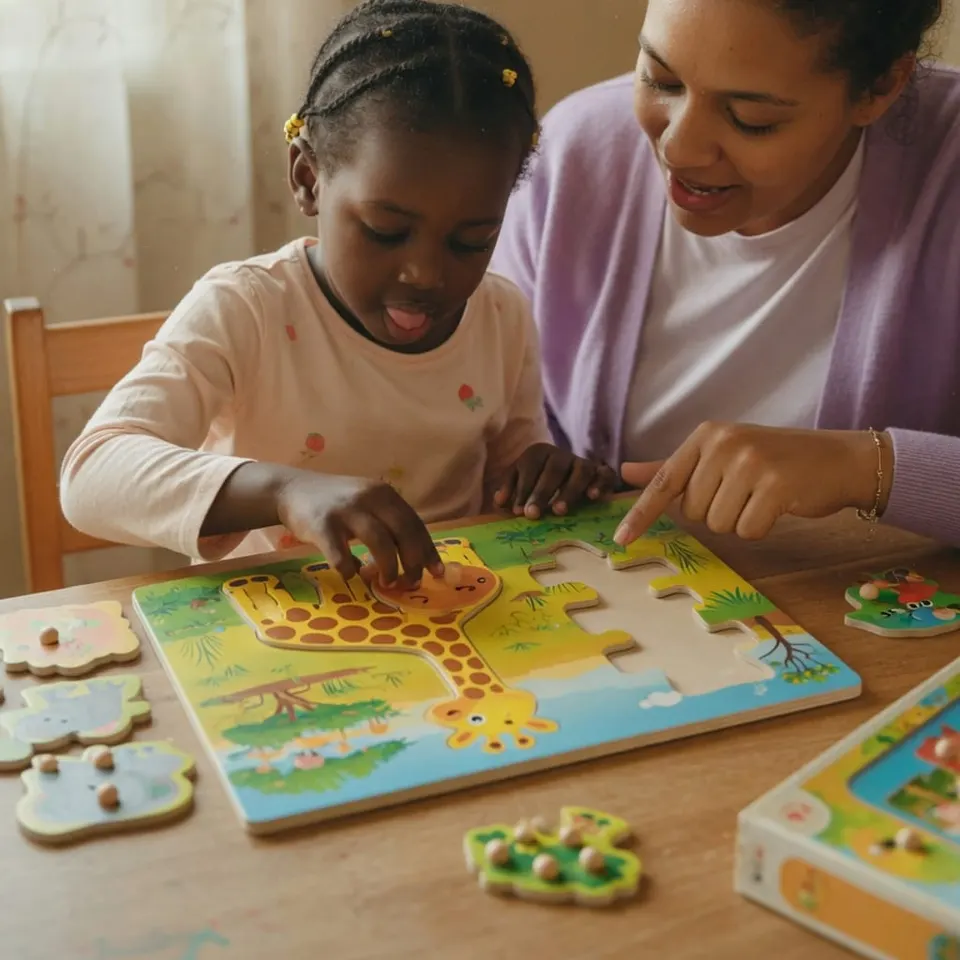
Naturalistic ABA, such as Pivotal Response Training (PRT) or incidental teaching, embeds learning in everyday activities. For a seven-year-old with echolalia, a therapist might set up a preferred activity (e.g., a puzzle) and wait for the child to initiate. When the child echoes a phrase from a show about puzzles, the therapist uses that moment to model a related request. These strategies help the child use functional language in real-life contexts, reducing reliance on rote repetition.
What to Expect in ABA Sessions for a 7-Year-Old
Every ABA program is individualized, but there are common elements for a child this age. Sessions typically involve one-on-one work with a Registered Behavior Technician (RBT) under BCBA supervision.
Assessment and Goal Setting
The first step is a comprehensive assessment. The BCBA will observe the child in natural settings, interview parents, and possibly use standardized tools like the Verbal Behavior Milestones Assessment and Placement Program (VB-MAPP). Goals are written for communication, such as: Child will use a 3-word utterance to request an item without echolalia in 4 out of 5 opportunities.
Goals also address other areas like play skills, social interaction, and reducing interfering behaviors.
Sample Session Structure
A typical 2-hour session might include: a brief warm-up with a preferred activity, discrete trial training (DTT) for new vocabulary or sentence structures, a snack break where naturalistic teaching occurs, a play-based activity to practice functional communication, and a cool-down with a familiar game. Throughout, the therapist reinforces any appropriate language attempt, gently shaping echolalia toward independence.
Role of the BCBA and RBTs
The BCBA designs the program, trains the RBTs, and meets with parents regularly to review data. RBTs implement the plan daily and collect data on each goal. Parents are encouraged to participate and practice strategies between sessions. Consistency is key - the same prompting and reinforcement should happen at home, school, and therapy.

🔗 Related reading: ABA Therapy at Home for 2-Year-Olds: Key Benefits · Nearby ABA Therapy
The Cost of ABA and How Insurance Helps
ABA therapy can be expensive, but most insurance plans now cover it for autism spectrum disorder. For a seven-year-old with echolalia, insurance coverage often depends on medical necessity - i.e., the child has an autism diagnosis and the therapy targets deficits in communication.
Insurance Coverage (Private & Medicaid)
Private insurance typically covers ABA, though copays and deductibles vary. Under the Affordable Care Act, many plans must include behavioral health services. State Medicaid programs (e.g., EPSDT) also cover ABA when deemed medically necessary. Parents should check with their insurer for specific requirements like prior authorization or a diagnostic evaluation. ABA For My Child can help match families with providers who accept their insurance.
Out-of-Pocket Costs and Funding Options
Without insurance, ABA can cost $50-$150 per hour. Many families use school-based supports (an IEP may include ABA-related services) or state grants. Some providers offer sliding-scale fees. It is always worth exploring all options because early, consistent intervention yields the best outcomes for echolalia.
Practical Tips for Parents at Home
Parents play a vital role in reinforcing what the child learns in ABA sessions. Small, consistent changes at home can accelerate progress.
Reinforcing Communication Attempts
Whenever your child uses a functional phrase - even if it's partly echoed - respond positively. For example, if they say Time for bed!
in a scripted voice but it's truly time for bed, acknowledge it: Yes, it's time for bed! Let's go.
This reinforces that communication works. If they use the same phrase at the wrong time, gently model a more accurate one rather than ignoring the attempt.
Modeling Appropriate Language
Narrate your own actions using simple, clear sentences. Instead of Do you want milk or juice?
say Milk? Juice? You choose.
Providing choices with visual supports (pictures or objects) can reduce the pressure to use language and give the child a scaffold.
Creating a Communication-Friendly Environment
Reduce the demand for speech during stressful moments. Allow extra processing time - pause for 5-10 seconds after asking a question. Use scripts that are meaningful to your child (e.g., from a favorite show) as a bridge to new phrases. Celebrate every small step toward novel, spontaneous language.
Common Mistakes to Avoid
Being aware of pitfalls can prevent frustration for both parent and child.
Forcing Eye Contact or Stopping Echolalia Completely
Echolalia is not inherently bad. Forcing eye contact can increase anxiety and reduce communication. Instead, focus on the function of the repetition. ABA therapy works best when it respects the child's current communication style while expanding it.
Inconsistency Across Settings
A child may learn to say I need help
at therapy but still echo at home if parents respond differently. Consistency in prompting, reinforcement, and expectations across home, school, and therapy boosts generalization. The BCBA can help create a simple plan for all caregivers to follow.
Expecting Immediate Results
Language development takes time. A seven-year-old with a long history of echolalia will not become a spontaneous conversationalist overnight. Progress may be measured in small increases in novel utterances, reduced latency, or more accurate use of scripts. Celebrate these milestones.
How to Find the Right ABA Provider
Not all ABA providers have experience with echolalia or with school-age children. It is important to choose a BCBA who understands the nuances of repetitive language and can design a compassionate, effective program.
What to Look for in a BCBA
Look for a BCBA who uses a person-first approach, emphasizes functional communication, and involves parents in goal-setting. Ask about their experience with echolalia and verbal behavior interventions. A good BCBA will provide training for parents and collaborate with the child's school.
How ABA For My Child Can Help
ABA For My Child is a free matching service that connects families with vetted, BCBA-led ABA providers in your area. We do not deliver therapy ourselves; instead, we help you find providers who have the expertise your child needs. Whether you have private insurance, Medicaid, or are paying out-of-pocket, our service can simplify the search. Fill out a quick form, and we will recommend providers with availability and a track record of success with echolalia. Your time and energy are precious - let us help you focus on supporting your seven-year-old.
Echolalia in a seven-year-old can be a doorway to richer communication. With ABA therapy tailored to your child's unique strengths and needs, and a support system that includes a skilled BCBA and involved parents, progress is absolutely possible. Start by understanding the function behind the repetition, then take the next step toward finding a provider who can help your child build a voice of their own.